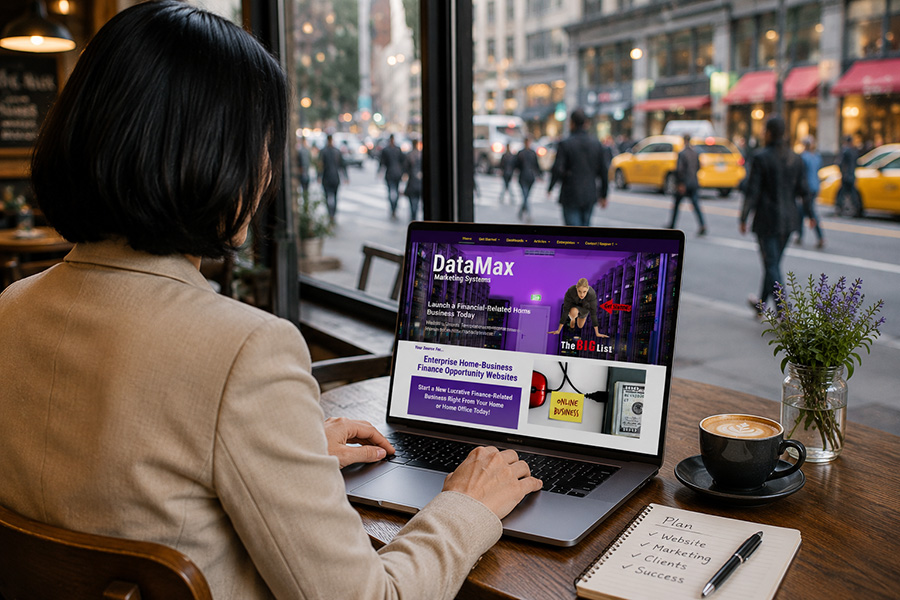
For millions of Americans, the traditional career path is changing. Corporate restructuring, automation, artificial intelligence, outsourcing and changing employer needs are causing experienced workers to reconsider what the next stage of their careers might look like. But losing—or simply leaving—a traditional job doesn’t mean leaving behind the knowledge, contacts and skills accumulated over years of employment.
In many cases, those skills can become the foundation of a low-cost, home-based business. And today’s entrepreneur doesn’t necessarily need an office, storefront, employees or large amount of startup capital. A laptop, smartphone, professional email address and well-designed website can provide much of the infrastructure needed to begin. The opportunity is supported by the growing demand for independent talent. Upwork’s 2026 research found strong demand for skills ranging from virtual assistance and project management to web design, marketing and AI implementation. It also reported that 77% of surveyed business leaders said AI was increasing their need for specialized, fractional talent rather than traditional full-time employees.
Here are 10 businesses that are particularly well suited to this new entrepreneurial environment.
1. Business & Management Consultant
One of the easiest businesses for an experienced professional to launch is a consulting practice. A consultant takes knowledge accumulated during a career and sells that expertise to companies that need it. Consulting can encompass operations, manufacturing, management, sales, logistics, purchasing, finance and dozens of specialized industries.
Example: After 25 years managing distribution centers, David loses his corporate position. He launches Davidson Distribution Consulting, working from home and helping smaller distributors improve warehouse operations, inventory management and purchasing procedures.
His website explains his experience, services and industries served and provides a way for prospective clients to schedule an introductory consultation. Management consulting and business strategy continue to rank among important categories for independent professionals.
2. Bookkeeping & Small-Business Accounting Services
Thousands of small businesses need bookkeeping help but cannot justify employing a full-time bookkeeper. An experienced accounting employee can provide bookkeeping, invoicing, accounts-payable management, QuickBooks assistance, financial reporting and related services remotely from a home office.
Example: Maria spent 18 years in the accounting department of a regional construction company. She establishes Maria’s Small Business Bookkeeping Services and signs up six local companies that each need several hours of assistance every month.
Accounting and bookkeeping remain among the most in-demand independent professional skills, and recent hiring data has shown continued demand from small and midsize businesses.
3. AI Implementation Consultant
This is one of the newest opportunities for home-based entrepreneurs. Millions of small-business owners know that artificial intelligence is becoming important but have little idea how to actually use it in their businesses. An AI implementation consultant doesn’t necessarily develop artificial intelligence. Instead, the consultant helps ordinary businesses determine where existing AI tools can save time and improve productivity.
Example: Kevin becomes an AI Productivity Consultant serving insurance agencies. He helps agencies use AI to develop marketing content, summarize documents, create internal procedures, answer routine questions and automate repetitive administrative tasks.
Demand for skills explicitly involving the application of AI increased 109% year over year in Upwork’s 2026 analysis, including particularly strong growth in AI integration.
4. Digital Marketing Consultant
Every small business needs customers, but many owners have neither the time nor expertise to manage today’s increasingly complicated digital marketing environment. A home-based marketing consultant can specialize in social media, search-engine optimization, email marketing, lead generation, online advertising or overall marketing strategy.
Example: Jennifer spent 12 years working in corporate marketing. She launches JMS Digital Marketing from her home office and specializes in helping local contractors improve their websites, Google presence, email campaigns and social-media marketing.
Social-media marketing, SEO, sales and business development, lead generation, email marketing and marketing automation all appear among Upwork’s most in-demand sales and marketing skills for 2026.
5. Career Coach & Résumé Consultant
When employment markets change, people frequently need help navigating those changes. Career coaches can provide résumé development, LinkedIn profile assistance, interview preparation, job-search strategies and career-transition coaching.
Example: Susan spent 20 years as a corporate human-resources manager. She now operates Career Path Professionals from home, helping middle-aged professionals reposition themselves after layoffs or corporate restructuring. Her website establishes her professional credentials and allows prospective clients to select coaching packages and schedule consultations.
Career coaching has also appeared among rapidly growing independent professional skills in recent years.
6. Virtual Assistant & Fractional Administrative Services
Small-business owners frequently need administrative assistance but don’t need another full-time employee. That creates an opportunity for experienced administrative professionals to work remotely for several clients. Services can include scheduling, email management, customer follow-up, CRM administration, research, document preparation, invoicing and general office support.
Example: Linda previously worked as an executive assistant. She establishes Executive Office Solutions from her home and provides ten hours of administrative assistance each month to five different small-business owners.
General and executive virtual assistance remain among the most in-demand administrative skills on Upwork, and SMB demand for virtual assistance increased in recent hiring data.
7. Recruiting & Talent-Sourcing Consultant
Experienced human-resource professionals can also establish independent recruiting businesses. Rather than becoming an employee of another corporation, the recruiter works with multiple companies to locate candidates for difficult-to-fill positions.
Example: Michael spent 15 years recruiting engineers for manufacturers. He establishes Technical Talent Search, specializing in finding engineers, plant managers and skilled technical personnel for small and midsize manufacturers.
The business can be operated primarily from a home office using LinkedIn, telephone, email, video conferencing and a professional website. Recruiting and talent sourcing have ranked among highly demanded independent accounting-and-consulting-related skills.
8. Fractional Executive
Fractional executive services represent an especially interesting opportunity for displaced senior executives. A small company may desperately need an experienced CFO, CMO, COO or HR executive—but it may not need or be able to afford that person five days a week. The solution is a fractional executive.
Example: Robert was previously the CFO of a $40 million company. Instead of looking for another full-time CFO position, he establishes RJM Fractional CFO Services. He eventually acquires five smaller companies as clients. Each receives several hours of his time every month for financial planning, cash-flow management, banking relationships and strategic advice. He essentially becomes the part-time CFO for several businesses simultaneously.
This model is particularly relevant as businesses increasingly look toward specialized fractional talent. In Upwork’s 2026 survey, 77% of surveyed business leaders said AI was increasing their need for specialized fractional talent.
9. Training, Tutoring & Online Education
Knowledge itself can become a product. Teachers, corporate trainers and experienced professionals can provide private tutoring, professional training, certification preparation, workshops and online courses from home.
Example: Angela spent years providing sales training for a national corporation. She creates Professional Sales Academy, providing live Zoom training and private coaching to salespeople and small-business owners. Her website becomes the hub of the business—explaining the courses, establishing Angela’s credentials, collecting registrations and providing access to training materials.
Training and development has also appeared among fast-growing independent professional skills.
10. Specialized Referral & Brokerage Business
Some of the lowest-cost businesses to enter are those where the entrepreneur doesn’t manufacture the product or provide the capital. Instead, the entrepreneur finds customers who need a particular product or financial service and connects them with established providers. Opportunities can include commercial finance brokerage, factoring consulting, equipment-finance referrals, business-loan referrals, mortgage-note brokerage, legal-funding referrals and other specialized intermediary businesses.
Example: James launches Southeastern Business Funding from a spare bedroom. He doesn’t lend his own money. Instead, he develops relationships with commercial lenders and factors and markets financing solutions to small-business owners. When an appropriate transaction closes, he earns a referral or broker commission subject to the applicable agreements and legal requirements.
For businesses of this type, a professional website can be particularly important because the entrepreneur may never have a traditional storefront.
The New Home Office
What all ten businesses above have in common is important. They can generally be launched with relatively low startup costs. They can be operated from home. They don’t require a retail storefront. And most allow the entrepreneur to monetize knowledge or professional skills he or she already possesses. But being home-based doesn’t mean looking home-based.
Someone considering hiring a consultant, bookkeeper, recruiter, fractional CFO or career coach is likely to search for that person online before making contact. The entrepreneur’s website becomes the modern equivalent of the traditional office. It establishes a business identity. It explains services. It displays credentials. It provides professional contact information. It generates inquiries.
And perhaps most importantly, it tells prospective customers:
“I’m in business.”
For an experienced professional suddenly facing career displacement, that distinction can be powerful. Instead of asking:
“Who is going to hire me?”
the better question may become:
“Who can I help—and how can I turn what I already know into a business?”
For a growing number of professionals, the next career opportunity may not be another job at all.
It may be a business of their own.